Ricky Skiba Coaching / Strength journal
What to Expect at a First Personal Training Session in SW Portland
What to expect at a first personal training session with Ricky in SW Portland, from warm-up to the full hour.
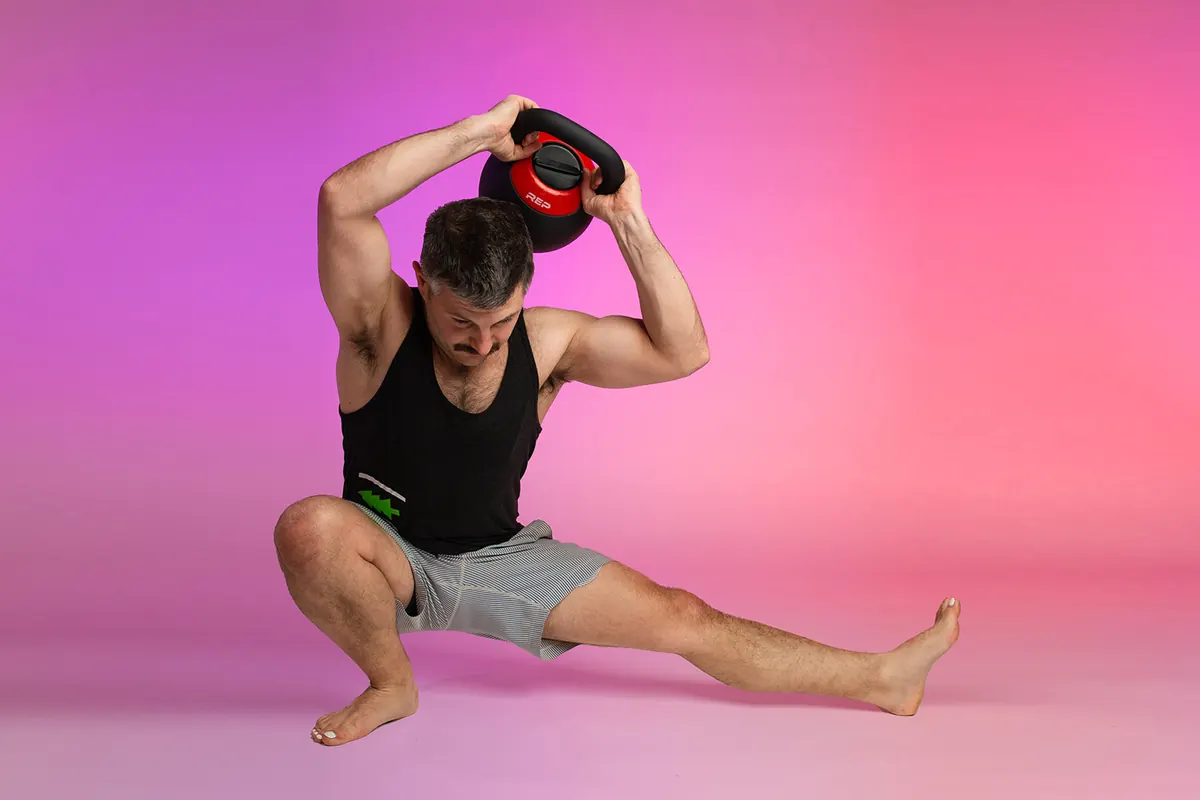
What to expect at a first personal training session
Starting with a new trainer can feel like walking into a room where everybody knows the rules except you. My goal is to make the first session clear, useful, and human. You do not need to arrive knowing how to use every kettlebell or having a list of perfect answers. We start with what your body and your week are actually like.
Before you arrive, we have already talked about limitations and past injuries. If there is something specific that needs attention, we begin there. Otherwise, I show you what a typical hour of training with me looks like. We take our shoes off and go straight to the mat for a warm-up. There is no surprise fitness test or 45-minute assessment waiting around the corner.
We warm up, then adjust
The warm-up gives me a chance to see how you are moving today. It may include the world's greatest stretch, down dog into cobra, cleans, halos, squats, and Jefferson curls. That is the list. The point is not to collect as many movements as possible. It is to see what feels ready and decide whether we should take a more therapeutic approach or move into direct strength work.
People bring different bodies and different histories into a session. A shoulder injury, cranky knees, or tight hips can affect how a movement feels. My programming is organized around muscle groups rather than a rigid list of exercises. That gives us room to adjust a movement without abandoning the goal of the session. If one version does not feel right, we choose another way to work the same area.
You can tell me what you notice. You do not have to explain it in special trainer language. “That feels weird,” “my hip is tight,” or “I am not sure about this” is enough information to start a useful conversation.
If you want a plan built around your actual week, book a free consultation and we can talk through a useful first step.
Strength work has room for rest
A strength session does not need to be a race. On a heavier set, one or two minutes of rest can support the goal of building strength better than keeping you moving without a break. Rest is part of the work, not evidence that you are doing the session wrong.
We can talk while we move, and I am a bit of a chatterbox. At the same time, a one-hour session is your time. If we spend fifteen minutes talking, that is fifteen minutes we are not using to train. We can keep the conversation relaxed and still pay attention to what you came in to do.
The session is meant to feel supportive and properly challenging. You should know what is happening and why we are doing it. I want you to leave feeling that you got a good workout, not wondering where the hour went. Good music helps. So does knowing you can ask a question or say when something needs to change.
A plan can change without losing its purpose
I build six-week cycles with two sessions each week. That gives the core and other muscle groups regular attention, with enough variety and challenge to keep the work engaging. Training twice a week means about two hours of training in a week. It is a specific rhythm, not a test of how busy you can make your calendar.
The plan covers muscle groups rather than requiring one exact movement no matter what. If your shoulder, knees, or hips need a different option, we can adjust while keeping the session focused. The warm-up and your feedback help me decide what makes sense on that day.
This is also why a first session is not a promise that every later session will look identical. The plan gives us structure. Your experience gives us useful information. Strength work can be steady without being rigid.
We use the full hour, then decide what is next
Sessions usually use the full hour. At the end, we talk about whether you want to continue. There is no need to decide before you have seen what training together is like. You can ask about the rhythm, the exercises, and whether the coaching feels like a fit.
The first session should leave you with a clearer picture of the work, not a pile of pressure. I do not want to waste anyone's time or money. You deserve to understand what you are signing up for and to decide based on an actual experience.
If you are unsure whether a first session would work with your history or schedule, we can talk before you book. A useful first step is a conversation, not a demand to arrive already confident.
Questions are part of the session
It is fine to ask why we are using a movement, how much rest to take, or what a word means. It is also fine to say that you would like to try something a different way. Training is not a performance where you have to hide confusion. Understanding what is happening helps you take part in the session.
You are not expected to remember every detail from the first day. The point is to begin with a clear conversation, warm up, try strength work, and see how it feels. The plan can build over time. A good first meeting leaves room for curiosity and honest feedback.
If you would like a plan built around your actual week, book a free consultation and we can talk through a useful first step.
Good questions
Do I need kettlebell experience before the first session?
No. We talk about your experience and limitations before you arrive, then I show you what a typical session looks like.
Is the first session a long assessment?
No. We warm up, work on strength in a way that fits you, and use the hour to see whether training together feels useful.