Ricky Skiba Coaching / Strength journal
Personal Training vs. Group Classes: Why Some People Plateau
Personal training vs group classes: see how individualized strength progress can complement the classes and community you already enjoy.
Personal training vs group classes is not an all-or-nothing choice
Group classes can be a great place to find an instructor you like and a community you want to return to. The workout can feel hard, and that matters. A class can also give you a consistent time to move. If you enjoy your classes, there is no reason to assume that the only next step is quitting them.
The question is whether the class is giving you the kind of strength challenge you are looking for. One missing piece for some people is progressive overload: gradually asking the body to do more over time. In a class, everyone may use the same weight. You can end up assuming it is the right weight for you even when it is not.
Some classes emphasize heart-rate work. That can be a real cardio challenge, but it may not give you the individual progression you need for building strength. Personal training offers space to look at your starting point, choose a weight that fits, and make changes as you get stronger.
A hard workout and a strength plan are different things
Feeling tired after exercise does not automatically tell you how your strength is progressing. A class can make you work hard while the weights and movement patterns stay about the same. That is not a flaw in every class. It may simply be a different kind of workout with a different goal.
Strength work needs a way to notice where you are starting and how to progress. I begin with base numbers. Then, every three to four weeks, we may add five to ten pounds and a new movement pattern. The approach is slow and steady. The point is to challenge you in a way that fits your current ability, then build from there.
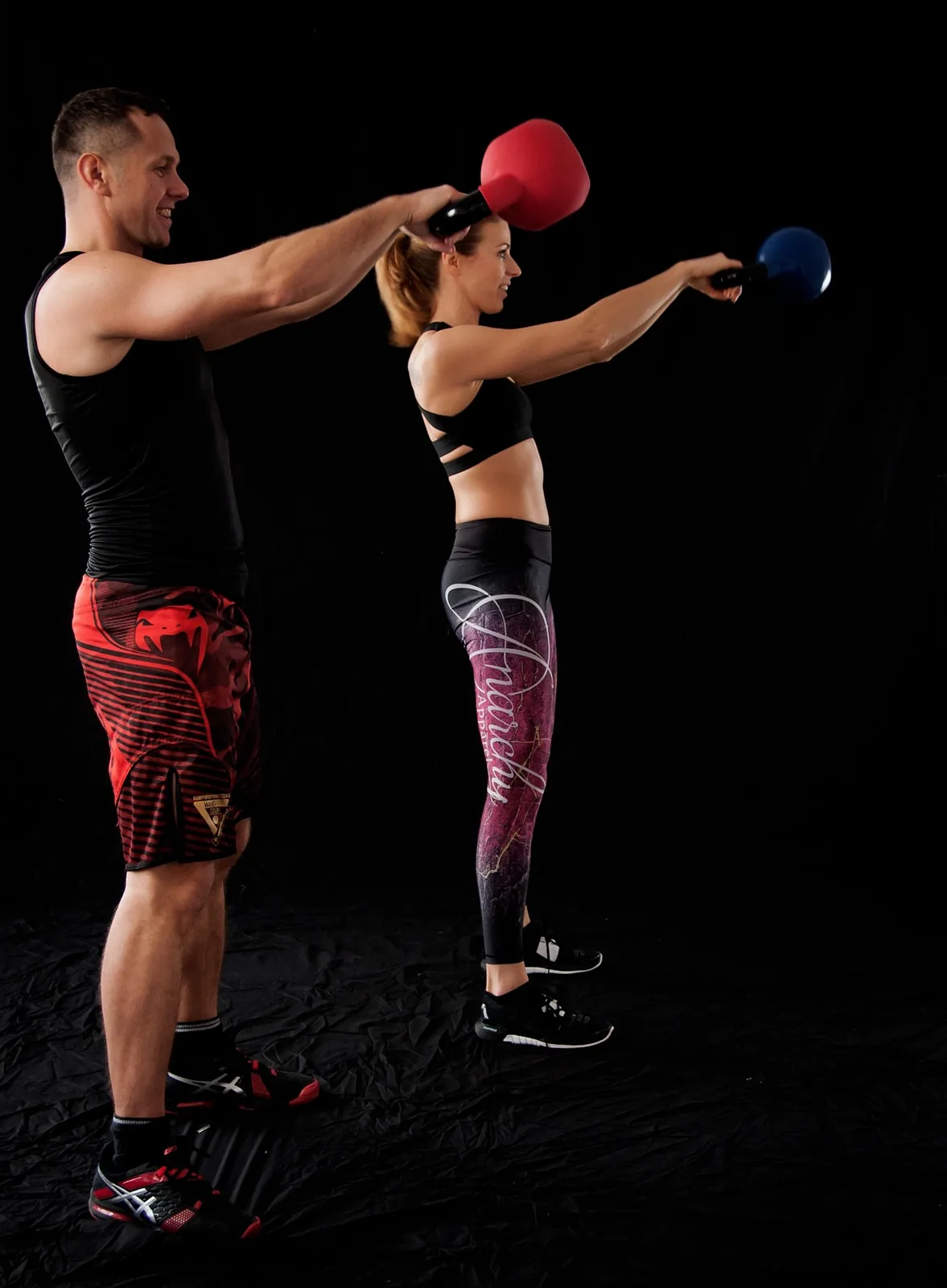
Kettlebells can add a cardio element, so strength and heart health can be trained together. The tool does not replace the need to choose a suitable challenge. The plan still needs to match the person doing the work.
If you want a plan built around your actual week, book a free consultation and we can talk through a useful first step.
One person's experience, not a promise
One woman I worked with had attended group classes three times a week for years. She liked the classes and did not need to stop enjoying them. She had not noticed a change in how she felt or in what she could lift. She started training with me once a week, where we worked on lifting heavier and on the beliefs she had about her own strength.
Over time, she moved to two personal training sessions a week and dropped one class. The weights she used in classes went from three to five pounds to ten to fifteen pounds. Her major lifts with me were around fifty pounds. She told me her energy was way up. That is one person's experience, not a result I can promise to somebody else.
Another client in her thirties had been doing cardio-style classes. She got serious about lifting heavier weights and, after six weeks, felt stronger and found her classes easier. That is also one person's experience. It is not a schedule or outcome that every client should expect.
Keep the parts of exercise you enjoy
If you love your class instructor or community, keep that in the picture. Individual coaching can add a place to work on your own strength progression. It does not have to replace a social activity that you enjoy.
The useful question is not “Which kind of person am I, a class person or a personal training person?” It is “What do I want to be able to do, and what kind of coaching would help me practice that?” Sometimes the answer includes both.
In a one-on-one session, we can talk about which weights are challenging for you, what you have done before, and how to build from those starting numbers. You are not expected to prove that you deserve a heavier weight. We figure out a sensible next step together.
Progress should feel challenging and still human
Training can be playful. I joke around and share bits of my life because I think openness can help people want to come back. Strength work does not need an aggressive, serious face to count. It needs attention to the person doing it and enough challenge to make the work meaningful.
Slow progress is still progress. Adding a little weight or learning a new movement pattern can be a useful step. If a particular week is rough, we can respond to the day instead of pretending every session should feel identical.
What to ask yourself next
Think about whether the class you attend gives you a way to build strength over time. Notice whether you know which weight to choose, whether the exercises change to fit you, and whether you have a clear sense of what you are working toward. Those answers can help you decide if individual coaching would add something useful.
You do not have to quit your class or sign up for a complicated plan to ask the question. A conversation can help you compare what you are already doing with the kind of strength work you want to add.
If you want a plan built around your actual week, book a free consultation and we can talk through a useful first step.
Good questions
Do I have to stop taking group classes if I work with a trainer?
No. Personal training can complement classes you enjoy by adding individual attention to strength progression.
Does personal training guarantee faster progress?
No. Individual coaching can help guide the work, but each person's experience is different and results are not guaranteed.