Ricky Skiba Coaching / Strength journal
Posture Is About Muscle Balance, Not How You Hold Yourself
Learn why posture depends on muscle balance, core strength, and bracing rather than simply standing up straight.
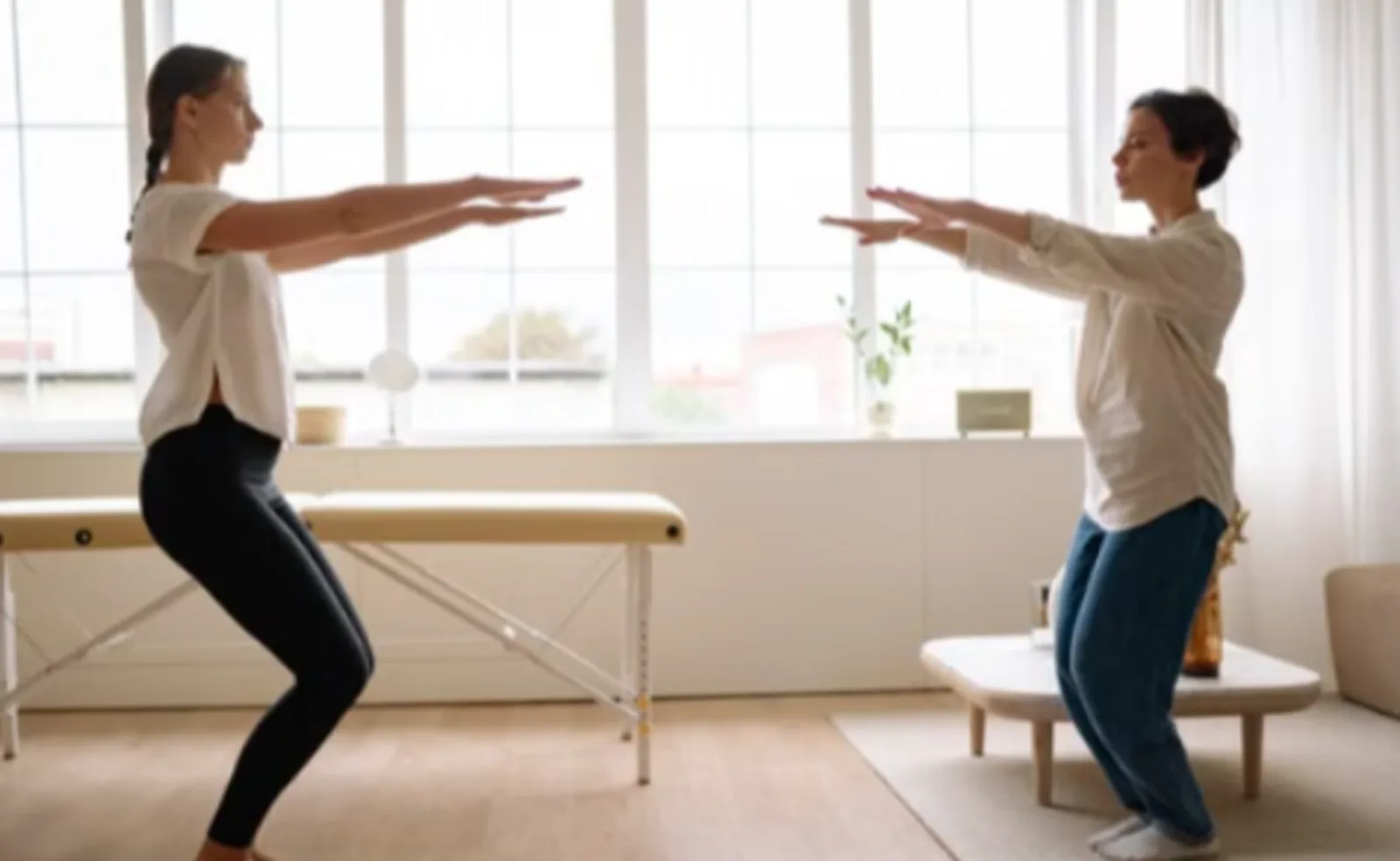
Posture Is About Muscle Balance, Not How You Hold Yourself
There's a lot of advice out there about how you're supposed to stand: shoulders back, chest up, chin tucked. What rarely gets said is that people with good posture usually aren't holding themselves any special way. Instead, good posture comes from muscle balance throughout the body.
When your muscles are developed in proportion and work together effectively, your body naturally settles into better positions. You don't have to constantly remind yourself to sit up straight or pull your shoulders back. The structure is already there.
Muscle Balance
Many people treat posture like a position they need to force themselves into. In reality, posture is more often the result of balanced strength and coordinated movement.
If certain muscles become excessively tight, weak, or dominant, your body begins compensating. These compensation patterns can affect how you stand, move, and perform daily tasks.
When strength is distributed more evenly throughout the body, movement becomes smoother and posture often improves naturally.
Think of a Balloon
An uninflated balloon is a saggy, shapeless piece of rubber.
Once you fill it with air, it becomes firm, structured, and capable of holding its shape.
Your body works similarly.
If you're not training, moving, or creating tension through your muscles, everything can feel less stable and supported. As strength increases and muscles begin working together more effectively, your body develops structure and control.
Strength creates support. Support creates stability.
If you want a plan built around your actual week, book a free consultation and we can talk through a useful first step.
Balance Is the Goal
Now imagine a balloon with one section of rubber that is much thicker than the rest.
As the balloon fills with air, the shape becomes uneven.
The body can work the same way.
If all you ever train is your chest, those muscles may become dominant and pull your shoulders forward. If you strengthen your quadriceps but ignore your hamstrings, your movement quality may suffer.
Fitness professionals often refer to these relationships as antagonistic muscle pairs. These are opposing muscles that work together to create balanced motion.
Examples include:
- Chest and back
- Quadriceps and hamstrings
- Glutes and hip flexors
- Biceps and triceps
- Shoulders and lats
Training these muscle groups together helps restore balance and encourages healthier posture.
Your Breath Matters
Breathing plays a major role in how your body creates stability.
Your lungs, diaphragm, core muscles, and pelvic floor work together during every breath. When you inhale, these systems expand and create pressure. When you exhale, they coordinate to maintain support and control.
This process is often called bracing.
Anyone who has lifted a heavy weight understands the value of proper bracing. It helps stabilize the spine, improve force production, and reduce unnecessary strain during movement.
The better these systems work together, the easier it becomes to maintain posture and move efficiently.
Why Core Strength Is Important
Many people think core training is only about visible abdominal muscles.
In reality, your core serves as the foundation for almost every movement you perform.
The core helps transfer force between your upper and lower body, stabilize your spine, and maintain balance while you move.
Without sufficient core strength, maintaining proper body alignment becomes more difficult.
That's one reason almost every workout I design includes some form of core training.
Strong core muscles create the support system that allows the rest of the body to function more effectively.
What This Looks Like in My Programs
I train most clients twice per week, so every exercise needs a purpose.
Each workout includes core training and balanced movement patterns that target the entire body.
Instead of focusing on a single muscle group, we work on developing strength and movement quality throughout the system. That means training chest and back together, strengthening glutes and hip flexors, and improving both mobility and stability.
The goal isn't simply lifting more weight.
The goal is creating a body that moves well, feels strong, and functions effectively.
What About Posture?
If you train through full ranges of motion, strengthen opposing muscle groups, and learn how to brace correctly, posture often takes care of itself.
You stop relying on constant reminders and begin relying on strength, stability, and coordination.
Those improvements tend to last because they're based on physical adaptation rather than temporary corrections.
Good posture becomes the outcome of good training.
Build Strength From the Inside Out
Many people spend years trying to improve posture by focusing only on how they stand or sit.
A more effective strategy is building the systems that support posture in the first place.
When you improve muscle balance, strengthen your core, and learn proper bracing techniques, your body develops the foundation it needs to support itself naturally.
The result is better movement, better stability, improved confidence, and a stronger body overall.
Ready to Build Better Posture?
Text me at 413-426-3501 or visit rickyskibacoaching.com.
I coach over Zoom from anywhere and work with clients in person in SW Portland and Ashcreek.
Whether your goal is posture improvement, strength development, or better movement quality, building balanced strength throughout your body can help you feel and perform your best.
I'm a trainer, not a doctor. If you have pain or a diagnosed posture or breathing condition, consult a qualified medical professional before starting a new exercise program.
If you'd like help putting this into practice, book a free consultation.